A Ceiling Stain That Keeps Spreading? How to Trace a Hidden Water Leak
Quick Answer: To find a hidden water leak behind a spreading ceiling stain, work backward from the stain in three steps. First, read the stain itself: rings, color, and whether it grows on dry days or only after rain. Second, sort the likely source by timing, since a stain that grows only during storms points to the roof or exterior, while a stain that grows on dry days points to plumbing or condensation. Third, check the spots water travels to and from, including the attic, the room above, and the pipes and ducts nearby. Water often moves along framing before it shows up, so the stain is usually not directly under the source. In humid East Tennessee, a slow leak can feed mold in the cavity within a couple of days, so a stain that keeps growing deserves attention now, not later.
You notice it on a Tuesday morning, a tan patch about the size of a coffee saucer in the corner of the bedroom ceiling. You tell yourself it is old. By the weekend it has a darker ring around it and has grown to the size of a dinner plate. After the next rainstorm rolls through the valley, it has a new edge, and the paint is starting to bubble.
A ceiling stain that keeps spreading is rarely a cosmetic problem. It is a message that water is getting into a place it should not be, and that it is doing so repeatedly. The stain is only where the water finally became visible. The leak itself can be several feet away, and sometimes it is a different story from the one you assume. Here is how we trace it, the same way we do on service calls across Kingsport and the surrounding Tri Cities.
Why a Ceiling Stain Is Never the Whole Story
Water does not fall straight down through a house. It follows whatever path gives it the least resistance, and in a framed home that path is usually along a rafter, a joist, a pipe, or the top of a wall plate. A roof leak can enter at one point and travel six feet along a rafter before it soaks into the drywall below. A small plumbing drip can run along a supply line to a fitting and then drop in a completely different spot.
That is why the stain on the ceiling and the leak above it often do not line up. Starting your search by looking directly overhead is a reasonable first move, but it should not be the last one.
What The Stain Tells You
A ceiling stain means drywall has absorbed moisture and retained it. By the time discoloration appears, the material above has likely been wet long enough to indicate an ongoing problem.
Why It Keeps Spreading
A growing stain usually means moisture continues entering the ceiling. A single spill or storm may leave discoloration that stops spreading, while a steadily expanding stain points to an active source.
Why Drying It From Below Does Not Help
Painting over a stain or using a fan only addresses the surface. Wet insulation, framing, and materials above the drywall can remain damp, allowing hidden damage to continue developing.
Read the Stain Before You Climb Anywhere
Before you open an attic hatch or pull out a flashlight, spend two minutes studying the stain. It carries more information than most people realize.
Look For Rings
Multiple rings often show repeated wet and dry cycles. Each ring can mark when a leak started and slowed, common with intermittent roof or plumbing leaks.
Note The Color
Light tan or yellow stains may indicate water carrying dust from wood or insulation. Dark brown suggests an older leak, while dark spots can indicate mold growth.
Feel And Press The Area
Soft, spongy, or cool drywall may still hold water. Sagging, bowing, or bubbling paint indicates heavier moisture and possible ceiling failure requiring immediate caution.
Watch The Timing
Trace the stain's edge with a pencil and record the date. Check after rain and dry weather to see whether the stain changes or expands.
Tip: Take a photo of the stain each morning with a ruler or a coin beside it for scale. Two or three days of photos show you more about the leak's behavior than staring at the ceiling ever will.
Match the Timing to the Likely Source
Once you know when the stain grows, the list of suspects gets much shorter. Most hidden ceiling leaks fall into four groups.
Stain Grows During or After Rain
This points to the roof or the exterior of the house. Common culprits include cracked or lifted shingles, failed flashing around a chimney, vent pipe, or skylight, clogged gutters that push water back under the roof edge, and worn seals around roof penetrations. East Tennessee storms often arrive with heavy, wind driven rain, which finds weak points that stay dry in a gentle shower. Older homes in Kingsport, Bristol, and Johnson City, where roofs have been patched more than once, tend to have more of these weak points.
A related cause is a leak that shows up only after rain but is not a roof defect at all. Water can run down the outside of a wall, enter at a window or a siding gap, and then travel inside the wall cavity to the ceiling line.
Stain Grows on Dry Days
A stain that keeps expanding with no rain in sight usually points to plumbing. If there is a bathroom, laundry room, or kitchen directly above the stained ceiling, suspect a supply line, drain line, shower pan, toilet seal, or appliance connection. Water in these systems runs on a schedule, such as when someone showers or the dishwasher cycles, so the growth tends to follow household activity.
Also consider the water heater, a humidifier, or an upstairs washing machine hose. These get forgotten because they sit quietly until the day they do not.
Stain Follows the Seasons
Seasonal timing separates condensation from a true leak. In winter, warm moist indoor air can rise into a cold attic, hit the underside of the roof deck, and condense. That water drips onto insulation and soaks through the ceiling below. Poorly sealed attic hatches, bath fans that vent into the attic instead of outdoors, and thin insulation all make this worse. East Tennessee winters swing above and below freezing often, and those freeze thaw cycles can also create ice at the roof edge that lets meltwater back up under shingles.
In summer, the problem flips. Cold air from a duct or an air handler meets humid attic air, and the duct sweats. A duct with damaged insulation or a poorly sealed joint can drip steadily during the hottest, most humid weeks of the year. An air conditioner whose condensate drain line is clogged can also overflow into the ceiling below an attic air handler.
Stain Shows Up With No Pattern
Sometimes the stain seems to grow at random. That is usually a sign of more than one source, or of a slow leak that is easy to miss, such as a pinhole in a copper line or a weeping fitting inside a wall. Random timing also happens when water is trapped in insulation, which acts like a sponge. It releases moisture slowly and unpredictably as temperature and humidity change.
Check the Places Water Travels Through
With a suspect in mind, you can start checking the path. Do this safely, and stop if anything involves electrical hazards, a sagging ceiling, or a roof walk. Those are jobs for a trained crew.
The Attic
If safely accessible, inspect above the stain with a flashlight. Check rafters, roof decking, insulation, nail tips, and daylight. Follow stains uphill to locate possible entry points.
The Room Above
If beneath a bathroom or kitchen, inspect toilets, tubs, showers, sinks, caulk, connections, flooring, and tiles. Look for looseness, softness, moisture, or discoloration around fixtures.
Nearby Pipes And Ducts
Inspect supply lines, drain pipes, and HVAC ducts crossing the area. Look for drips, wet insulation, mineral buildup around joints, and condensation forming on cold surfaces.
The Exterior
Inspect roof edges, gutters, downspouts, flashing, chimneys, and window trim above the stain. Overflowing gutters can cause ceiling leaks, while poor drainage can affect basements and crawl spaces.
The Water Meter
Turn off every fixture and water-using appliance, then check the meter. If the dial or flow indicator continues moving, water is escaping somewhere, suggesting a supply leak.
Warning: Never poke, cut, or press hard on a ceiling that is sagging or bulging with trapped water. Wet drywall can give way all at once, and the water behind it may be near light fixtures or wiring. Keep clear, and shut off power to that area if water is anywhere near a fixture.
Why Hidden Leaks Cause Bigger Damage Than You See
Part of the trouble with a hidden leak is that the visible damage is always smaller than the real damage. Water soaks into drywall, insulation, and framing above the ceiling before it ever stains the paint. By the time you see the stain, the cavity has already been wet for days or weeks.
Insulation Holds Water
Wet insulation loses insulating ability and stays damp longer than surrounding surfaces. It can act as a reservoir, continuously feeding moisture toward the visible stain.
Wood Takes Time To Dry
Rafters, joists, and plates absorb water and release it slowly. Humid conditions can delay drying, leaving framing vulnerable to prolonged moisture damage and rot.
Mold Needs Very Little
Mold can begin growing within one to two days when organic materials remain damp. Closed ceiling cavities provide dark, warm, still conditions that encourage growth.
Fasteners And Fittings Suffer
Constant moisture corrodes nails, screws, and metal hangers. Over time, corrosion weakens drywall connections with framing, contributing to movement, separation, and sagging ceilings.
Smell Is A Clue
A musty odor around a ceiling stain often indicates damp conditions inside the cavity. Odors may appear before visible mold or discoloration becomes noticeable.
What to Do While You Are Still Tracing the Source
Finding the leak can take time, and you should not wait on the answer to protect the house. A few steps limit the damage while you work.
Contain What You Can
Place a bucket or tarp beneath drips and move furniture away. If ceilings bulge, have trained professionals handle pressure safely.
Stop The Supply If It Is Plumbing
If testing suggests a plumbing leak, shut off the main valve. For one fixture, use its individual shutoff valve.
Increase Airflow, Not Heat
Use fans and open windows during dry weather to improve airflow. Avoid directing heat toward wet ceilings or cavities.
Record What You See
Take dated photos and notes whenever the stain changes or grows. This information helps inspectors identify the source more quickly.
Avoid Painting Over It
Do not cover stains with primer or paint. Covering traps moisture and hides evidence, while returning stains indicate an unresolved leak.
Quick Answer: Water damage cleanup depends on where the water came from, not just how much of it there is. The IICRC S500 standard sorts water losses into three categories: Category 1 (clean, from a supply line or fixture), Category 2 (gray, carrying some contamination such as washing machine overflow), and Category 3 (black, grossly contaminated by sewage or floodwater). Category 1 water can usually be dried in place with air movers and dehumidifiers. Category 2 and 3 water force harder calls, since porous materials like carpet pad, drywall, and insulation often can't be dried and disinfected back to a safe condition and have to be cut out instead. In humid East Tennessee, clean water left inside a wall cavity can degrade toward Category 2 within 24 to 48 hours, which is why the source gets checked before anyone decides what to save.
A burst supply line under a bathroom sink and a sewage backup in a basement drain both leave standing water on the floor. From across the room they can look almost the same. Up close, they are not the same job at all, and treating them like they are is how a small leak turns into a bigger one.
One of those puddles is drinking-water clean. The other one carries bacteria, waste, and whatever the sewer line picked up on its way back into the house. The cleanup plan for each starts in a completely different place, and getting that starting point wrong wastes time on a home that's already losing ground to moisture.
How Professionals Find What You Cannot See
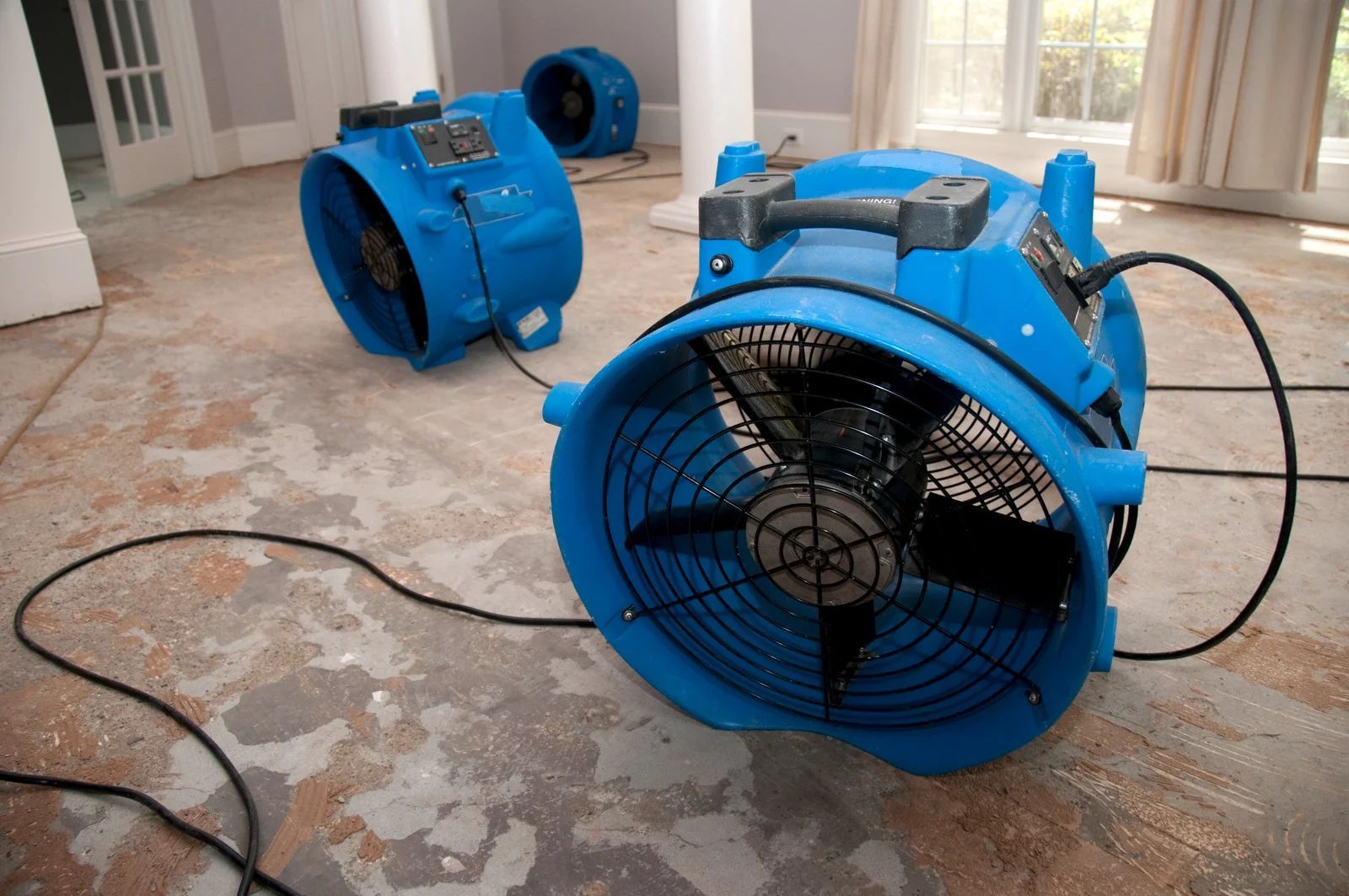
When a stain keeps coming back, or when the source is not obvious, restoration crews use tools that go beyond what a flashlight can show. We bring moisture meters that read how wet drywall, wood, and insulation are at different depths. Thermal imaging cameras reveal temperature differences that mark wet areas behind a surface, since wet material holds a different temperature than dry material around it. Hygrometers measure the humidity in the air and in cavities, and in some cases a small inspection opening gives a direct look inside.
These tools help us map the full wet area instead of guessing at its edges. Mapping matters because the stain on the ceiling is almost always smaller than the saturated area above it. If the crew dries only what you can see, the hidden wet material will bring the stain right back, and the cavity can stay damp enough for mold to take hold.
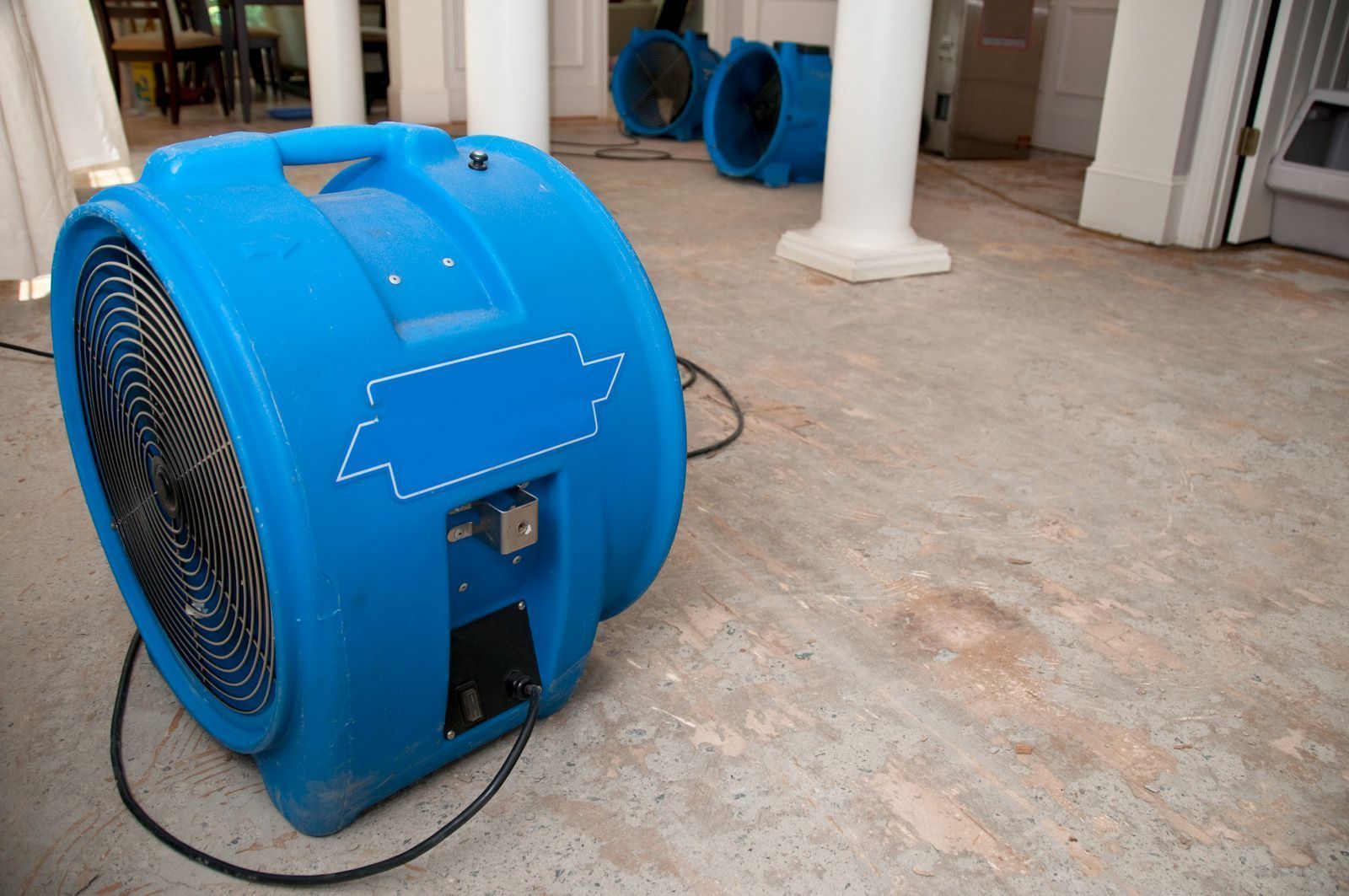
The drying itself is planned around what the meters show. Wet insulation that cannot be dried is removed. Drywall that has lost its strength is cut out along clean lines. Air movers and dehumidifiers pull moisture out of what stays, and readings are taken again until the structure reaches a dry standard. In East Tennessee, where outdoor humidity can stay high for much of the year, controlling the air inside the work area is just as important as the equipment pointed at the surfaces.
Frequently Asked Questions
How do I know if a ceiling stain is an active leak or old damage?
An active leak feels damp, cool, or soft, and the stain edge moves after weather or water use. Old damage is dry and stable. Marking the edge with a dated pencil line shows the difference.
Can a ceiling stain come from something other than a leak?
Yes. Condensation from an uninsulated duct, a bath fan venting into the attic, or warm moist air meeting a cold roof deck can stain a ceiling. Condensation follows season and indoor humidity rather than rainstorms.
Why does my ceiling stain only show up after it rains?
Rain related stains usually mean water enters through the roof or exterior and travels along framing to the ceiling. Failed flashing, cracked shingles, clogged gutters, and gaps around windows or siding are common entry points.
Should I cut a hole in the ceiling to look?
Not if the ceiling sags or bulges, since trapped water can drop all at once near wiring. A trained crew can open it. For a flat, stable stain, shut off power first and look carefully.
How long can a hidden leak sit before mold becomes a concern?
Mold can begin growing within one to two days when drywall, wood, and paper stay damp. In humid areas like the Tri Cities, cavities stay wet longer, so a spreading stain should be inspected promptly.
Will painting over the stain fix it?
No. Paint hides the discoloration but not the moisture underneath it. If the leak is still active, the stain will return, and trapped dampness keeps quietly damaging the wet insulation and framing above your ceiling.
Trace the Water Trail and Stop the Stain
A spreading ceiling stain is rarely about the ceiling itself. It is the point where hidden water finally became visible, and the real source is usually higher, farther away, and wetter than it looks. Reading the rings, matching the timing to rain or household use, and checking the attic, the room above, and the pipes and ducts nearby will narrow the search quickly. Protecting the area in the meantime keeps the damage from growing while you work toward an answer.
Dr Dry Restoration
has spent 20+ years helping homeowners in Kingsport, TN, trace stubborn leaks, and one lesson holds every time: a stain that keeps returning means the cavity above it is still wet. Measuring the moisture, mapping the full wet area, and drying it completely is what ends the cycle. Handled early, a slow leak stays a small repair, and your ceiling can finally go back to being the clean, dry surface it was always meant to be.